My typical week as Product Designer
I joined Algolia almost a year ago as a Product Designer (you can read more about it here). Although not a day is the same as the previous one, here’s what my typical week would look like.
Monday
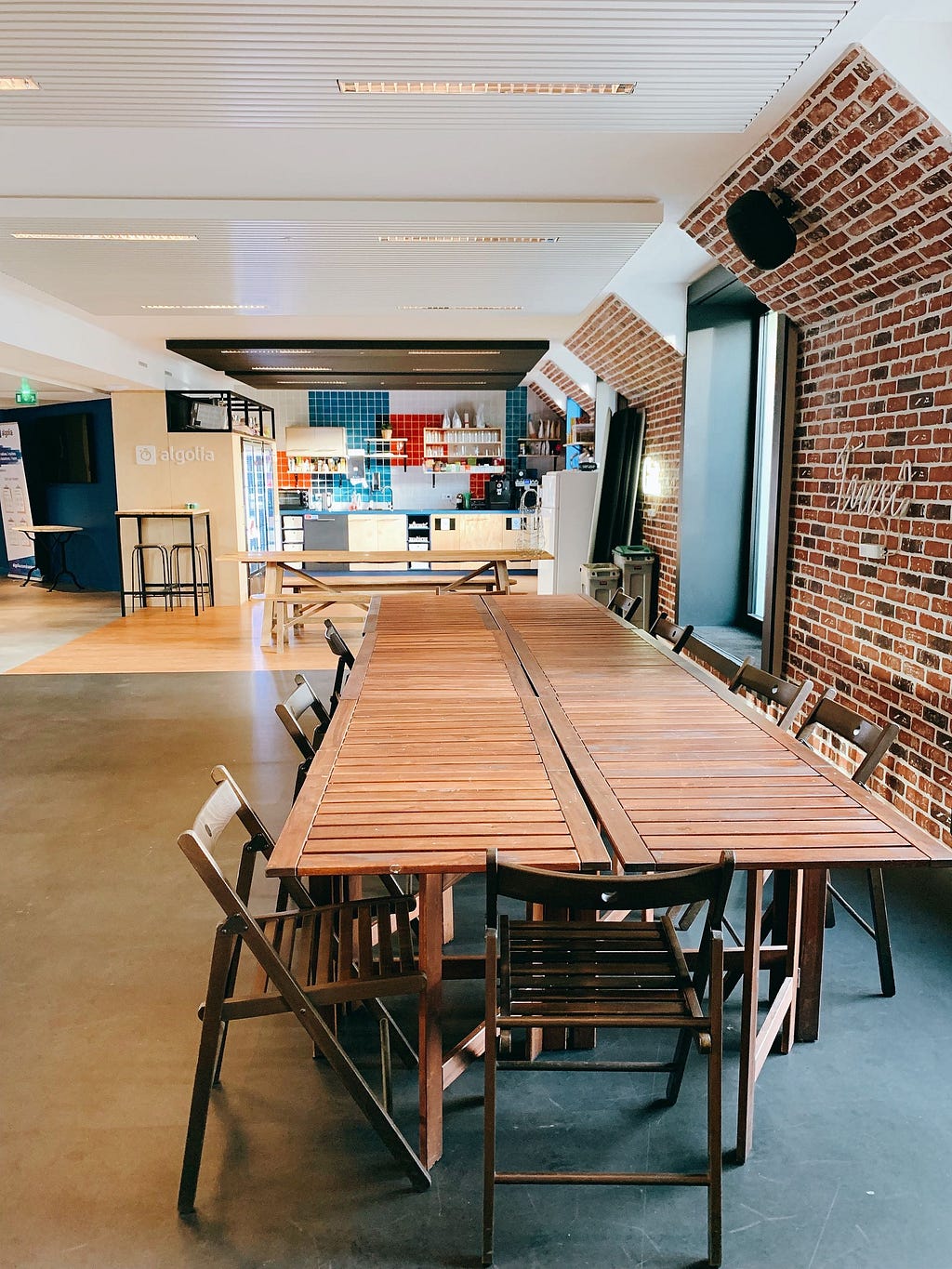
I am lucky to have diverse and friendly colleagues from all over the world, that’s why I like to start my week with a coffee (with sugar and lots of milk, forgive me!) in the kitchen area, catching up on what people have been doing over the weekend. For an expat like me, this is also an incredible source of inspiration what places to visit and what to do outside of work.
Mondays are usually dedicated to syncs and planning for the upcoming days. I sit down with my Product Manager and we walk over the progress of design tasks. We also have a quick “Goalfest Standup” in the Product Design team (we’re joined by User Researchers) — that’s where we update each other on the projects we’re working on, outline key goals — but also try to write down learnings.
Bi-weekly, we meet as a Product team. That’s when we, Product Designers, can connect more with Product Managers and help shape Algolia’s product future together.
Tuesday
Tuesdays are days when I sync with my squads — I am working with Relevance-Personalization (as the name suggests, the team’s main mission is to ensure we deliver relevant search results based on user’s previous actions and preferences) and E-commerce (Algolia’s Shopify and Magento integrations). It’s also when we meet for design critique with peer product designers: everybody presents what they have been working on and asks for specific feedback. This is when knowledge sharing happens in a very efficient way! On Tuesday afternoons, I also lead the so-called UX Office hours, where anyone from Algolia — developers, PMs, sales or customer-facing team members — can join and ask design-related questions (read more about our team rituals ).
At the end of the day, there is also the company-wide All hands meeting, when we get updates on general company issues and performance.
Wednesday is a no-meeting day
This is when I can fully focus on creative work and really progress with my projects. I am involved in the early stages of feature planning. This usually means having a look at what’s the current status of things and how new features could be implemented into existing user flows. These initial ideas are later translated into actionable steps and tasks. We like to back up our decisions with data, as early as possible: whether it’s recorded customer feedback or requests, data on existing behavior of users, or business goals. Then it’s my turn to work on first versions of screens for the feature, to produce mockups that I could discuss with my team or get early feedback from selected customers. Once we agree on a solution, I prepare final screens and deliverables to the developers. Part of our process is defining metrics for a shipped feature. After some time, we revisit our choices and the process starts anew — to bring improvements or iterations.
Thursday
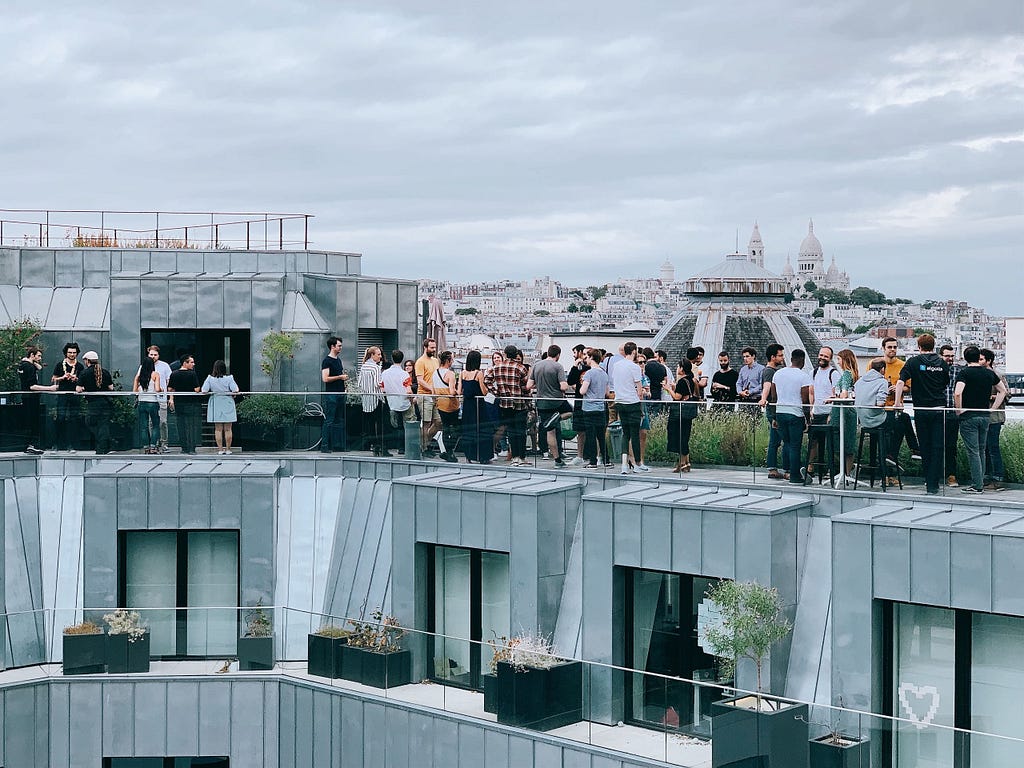
We have another session of design critique, where I can ask my colleagues for feedback on the iterations I’ve made. If you’re curious how we run design critiques at Algolia, head over to Sasha’s article. It’s also when we have a Brainshare lunch — we invite designers, product managers, UX writers, design systems creators to come to have lunch with us, and give us a talk, presentation or simply a chat on a topic of their expertise. It’s super interesting and valuable to see how other companies have approached issue X and what their solutions looks like. Knowledge sharing, discussion and learning are highly valued at Algolia. We have company-wide events like Show&Tell where each week, 2 Algolians share their topic and findings with the rest of the team. Afterward, we head out for Happy Hour — fresh drinks are served on one of Algolia’s terraces with a great view over Paris!
Friday
Fridays, similar to Wednesdays, are usually meeting-free, and that means progressing fast on projects again! However, it’s also the Product Review day. Depending on the stage of a project, together with the team, we present our work to the Head of Product to get valuable feedback. Sometimes, Product Designers are more involved, sometimes it’s the Product Manager who drives the discussion.
Tools I use
For general design work, I love Sketch. I’ve been an Adobe Photoshop user for many years, but for quite some time now I find Sketch to be the right tool for what I do. My colleagues are considering using Framer and Figma, but I haven’t really given it a real try yet.
Since I am not the only designer in the company, collaboration is important — I also need Abstract to track changes in my work. Then it’s InVision for prototypes and gathering feedback, and sometimes Zeplin to provide deliverables to the developers. For project management, we use Jira, Confluence, Asana, and the whole company runs on G-Suite.
—
All these activities make up my week. Sometimes it’s more busy with meetings, sometimes it’s more research and user interviews with clients, sometimes it’s focus on designing. In fact, there might not be a typical week, which is a good thing! :)
My typical week as Product Designer was originally published in Algolia Design on Medium, where people are continuing the conversation by highlighting and responding to this story.